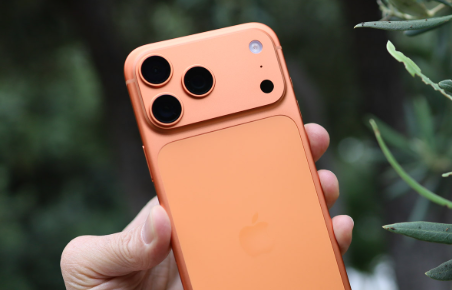

The Pixel 11 has run into a bizarre security problem: GrapheneOS says it cannot finish its port because the phone's ARM Memory Tagging Extension, or MTE, is not available in the way the project needs. That matters because GrapheneOS uses hardware memory tagging across its hardened operating system, while Google's stock Android does not enable MTE across the system by default.
- The Diagnostic: Pixel 11 appears to have severely limited MTE support, preventing GrapheneOS from completing its normal security model.
- The Markup Trap: This is not a $1,000 phone suddenly becoming unusable; the problem is a behind-the-scenes security capability most owners may never notice.
- The 5-Minute Fix: There is no software toggle that magically restores full MTE. If hardware-level security is your priority, choose a device with confirmed MTE support instead.
The Pixel 11 Security Problem Nobody Notices
Most people buying a new phone are checking three things first: camera quality, battery life and how fast the processor feels.
Almost nobody asks whether the phone can protect itself against certain classes of memory-safety attacks.
That is exactly why the Pixel 11 MTE controversy is so interesting.
Memory Tagging Extension is an ARM hardware security feature designed to catch memory errors such as use-after-free bugs and buffer overflows. Android's own documentation describes MTE as a tool for detecting and mitigating memory-safety problems, and notes that it has been supported on selected Android devices since Android 13.
In plain English, think of MTE like putting a tiny ID sticker on pieces of memory.
When software tries to use a piece of memory, the system checks the sticker. If the software is touching something it shouldn't, the hardware can catch it instead of simply letting the mistake continue.
That sounds invisible.
And that's the point.
You don't buy a phone because MTE makes Instagram open 0.2 seconds faster. You buy it because security features are supposed to work quietly in the background.
Why GrapheneOS Is Making Such a Big Deal About MTE
For normal Pixel owners, the controversy is easy to misunderstand.
Google's stock Android has historically supported MTE on compatible Pixel hardware, but it has not used it across the entire operating system by default. Google's Android documentation also says MTE can have performance or stability costs in certain configurations.
GrapheneOS takes a much more aggressive approach.
The project uses hardware memory tagging as part of its security model across the base operating system and compatible applications. That makes the underlying hardware support much more important than it is for somebody running ordinary Pixel OS.
GrapheneOS initially reported that it could only partially port its operating system to the Pixel 11 series because the required MTE support appeared to be missing from the software, firmware and probably the hardware.
Then came the more interesting update.
GrapheneOS later reported that the Pixel 11 does appear to retain at least minimal hardware-level MTE capability. However, the project believes much of the hardware acceleration was removed, apparently causing performance problems serious enough for MTE to be disabled at the firmware level.
That's a very different story from simply saying:
"Pixel 11 has no MTE."
The real story is messier.
And frankly, more interesting.
Did Google Really Remove MTE to Save Money?
This is where you need to separate what GrapheneOS believes from what Google has publicly confirmed.
GrapheneOS has suggested that Google reduced MTE hardware capability as a cost-saving decision. The project's later technical investigation points toward reduced hardware acceleration and severe performance problems.
But there is no confirmed public explanation from Google establishing that cost cutting was the reason.
That distinction matters.
It is tempting to write, "Google removed a security feature to save money." That's a killer headline. It is also stronger than the evidence currently supports.
What we can say is that GrapheneOS, a security-focused Android project, considers the Pixel 11's MTE implementation inadequate for its security model.
And that creates a nasty question for Google:
Why does a newer Pixel appear to be moving backward in an important hardware security capability that previous Pixel generations supported?
Google has not publicly provided a satisfying answer to that question.
Pixel 10 vs. Pixel 11: The Security Trade-Off
This is where the controversy becomes useful for regular buyers.
Google's own Android documentation currently lists the Pixel 8, Pixel 9 and Pixel 10 families among devices known to support MTE.
GrapheneOS also specifically recommends supported Pixel generations with hardware memory tagging as part of its security requirements.
| Security Path | Pixel 10 / Supported Pixel | Pixel 11 Situation |
|---|---|---|
| Hardware MTE | Supported | Severely limited / under investigation |
| Stock Android MTE | Not generally enabled system-wide | MTE remains disabled in the current software situation |
| GrapheneOS Compatibility | Supported devices | Full port blocked by MTE limitations |
| What Buyers Notice | Usually nothing day-to-day | Most users may notice nothing |
| Security Importance | High for hardened OS users | Potentially significant for GrapheneOS users |
For someone who just wants Gmail, YouTube, maps and a great camera, this may not change the buying decision at all.
For somebody buying a Pixel specifically because it is one of the best foundations for a hardened Android installation, it is a completely different calculation.
That's the audience Google cannot ignore.
There Is No Five-Minute Software Fix
This isn't a dirty cache, a broken setting or an Android update you can roll back.
You cannot simply open Settings, tap Developer Options and magically add missing hardware security capabilities.
Android's documentation makes clear that MTE depends on compatible hardware. Some devices expose experimental MTE controls, but those controls cannot manufacture hardware capabilities that are absent or heavily restricted.
What Pixel 11 Buyers Can Actually Do
1. Decide whether MTE matters to you.
If you have never heard of MTE before today, you probably don't need to panic.
Your phone isn't suddenly unsafe because of this one issue.
2. If you specifically want GrapheneOS, check supported devices first.
Don't assume "newest Pixel = best GrapheneOS phone."
That assumption is exactly what this controversy has broken.
3. Don't confuse stock Android security with GrapheneOS security.
Google can secure Android using many different mechanisms. GrapheneOS has a different threat model and deliberately pushes certain hardware security features much harder.
4. Wait for the hardware investigation to finish.
The Pixel 11 situation is still evolving. GrapheneOS has already revised its initial understanding after examining newer Android 17 beta firmware.
That's a good reason not to make a $1,000-plus purchase based on a single Reddit comment.
Three Hardware Truths Pixel Buyers Need to Know
Newer doesn't automatically mean more secure. A newer processor or camera system does not guarantee that every low-level security capability has improved.
Most users won't notice MTE. It is a background security mechanism, not a feature that makes your phone visibly faster or better.
Security-focused users are different. If you specifically want GrapheneOS, low-level hardware and firmware support can matter more than camera benchmarks, AI features or a shiny new Tensor chip.
The Pixel 11 controversy is ultimately bigger than one security acronym.
It shows how much of a modern smartphone's security depends on decisions that buyers will never see on a store shelf.
You can compare cameras.
You can benchmark processors.
You can measure battery life.
But you can't easily look at a phone's box and see whether its underlying security architecture gives a hardened operating system everything it needs.
And that's the uncomfortable part.
Would you still buy a Pixel 11 if you knew its low-level security hardware had been compromised for performance or cost — even if you'd never notice the difference during everyday use?
🛡️ DAYLL Editorial Transparency
This post was researched and synthesized by the Dayll consumer editorial team. We test, verify, and cross-reference public policies and insider tips to bring you actionable advice without sponsor influence.