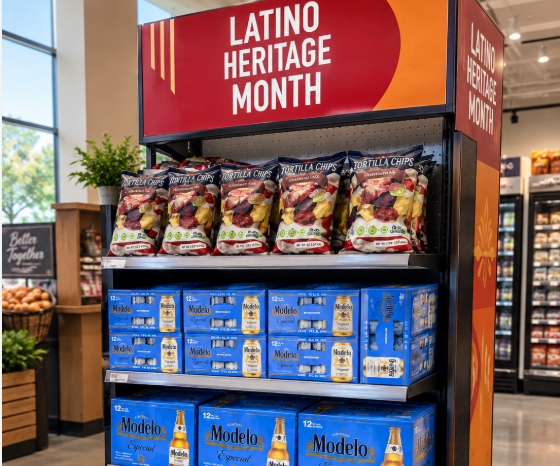
A reported Target store display has sparked a debate over cultural stereotypes, retail judgment, and how companies represent Latino communities. Reddit commenters questioned a Latino-themed header placed above beer and snack products, while others said they found the setup funny or harmless. The real lesson for retailers goes beyond one sign: a promotion can miss its mark when the cultural message doesn't match the products beneath it.
- The Reality: A Reddit discussion criticized a reported Target display pairing a Latino-themed header with beer and snack products.
- The Catch: Commenters also reported instructions concerning the sign, but the discussion alone does not verify Target's internal timeline, approval process, or intent.
- The Smart Move: Retailers should review the sign, product assortment, and cultural context together—and give store employees a clear way to flag problems before launch.
The Target Display That Turned Into a Brand Problem
A retail display has a straightforward job. Catch a shopper's eye, explain what connects the products, and make the purchase feel worth considering.
This reported display created a different kind of attention.
In the Reddit discussion, employees and shoppers questioned why a Latino-themed header appeared above beer and snack products. Some saw the combination as a lazy cultural stereotype. Others treated it as a joke. Several commenters who identified as Latino reportedly said they weren't offended, while others expressed frustration.
That disagreement matters because no community speaks with one voice.
A few people laughing at a display doesn't automatically make the concept thoughtful. A few people criticizing it doesn't prove every member of that community feels the same way, either.
The better question is whether the promotion had a meaningful connection between its cultural message and the products on the shelf.
A cultural label isn't a substitute for a merchandising strategy.
When the connection feels forced, shoppers may see more than a questionable product selection. They may see a company relying on assumptions instead of putting real thought into how it represents people.
And once a store photo starts circulating online, the retailer loses control of the conversation.
What Reddit Reported About the Sign—and What We Don't Know
The discussion included comments claiming that employees had received instructions related to the header. One commenter said a sales planner had circulated before communication arrived telling stores not to set it. Another described instructions to remove and discard the sign.
Those accounts raise a legitimate operational question: if a promotion had been canceled or changed, did the instructions reach store employees in time?
But there is an important limit here. These are reports from Reddit commenters, not independently verified statements from Target. The discussion does not establish the complete timeline, who approved the original concept, or whether senior decision-makers knowingly signed off on the final display after concerns were raised.
That distinction is essential.
A poor merchandising choice, a confusing instruction, and a deliberate decision to use a stereotype are not the same thing. Each calls for a different response, and the available discussion doesn't settle which explanation accounts for every part of this incident.
| Issue | What the Reddit discussion suggests | What remains unconfirmed |
|---|---|---|
| Cultural representation | Commenters questioned the association between the header and the products | The creative team's reasoning and intent |
| Product selection | Some shoppers considered the assortment a poor fit for the theme | The original merchandising brief |
| Store instructions | Commenters reported messages concerning whether to set or remove the sign | When each store received the instructions |
| Corporate oversight | The display was described as part of a sales-planning process | Who approved the final concept and what review occurred |
The takeaway isn't that Target has been proven guilty of a particular motive. It's that the reported display deserves scrutiny, while claims about the company's internal decisions need stronger evidence.
Good consumer reporting should do both: ask hard questions and respect the limits of what is known.
Why Beer and Chips Became the Flashpoint
Beer and snacks are everyday retail products. Latino shoppers buy them, just as people from many backgrounds do. Their presence in a cultural promotion is not automatically inappropriate.
The concern is what happens when a broad identity label sits above a narrow assortment and appears to present those products as representative of an entire community.
That is a messaging problem.
Imagine two ways to build a themed promotion.
- The shortcut: Select a few familiar products, add a cultural label, and assume shoppers will understand the connection.
- The thoughtful approach: Start with a clear promotional purpose, choose products that genuinely support it, and review the complete display before it reaches the sales floor.
The second option takes more work. It also gives the retailer a stronger answer when shoppers ask why those products were grouped together.
Some commenters suggested featuring Latino-owned brands. That could be a useful direction if ownership claims are accurate and the products fit the promotion. But simply adding a few brands to a display isn't enough to guarantee meaningful representation.
A thoughtful campaign needs a real connection between its message, products, and intended audience. A sign alone cannot create that connection.
The Bigger Mistake: Treating Representation Like a Shelf Label
Retailers are under pressure to make displays simple, fast to understand, and easy to reproduce across many stores. That pressure can encourage shortcuts: a broad theme, a handful of products, and a headline designed to catch the eye.
But cultural identity isn't a standard product category.
A promotion that works for one audience may strike another as reductive. Even people who share the same background may disagree about whether a particular campaign is funny, harmless, thoughtful, or offensive.
The answer isn't to demand universal agreement. That standard is impossible.
Instead, companies should ask more useful questions before launch:
- Is the theme connected to the products in a clear, defensible way?
- Does the display rely on a narrow assumption about the people it references?
- Have people with relevant experience had a chance to review the message?
- Can store employees raise concerns before the display goes live?
These questions don't guarantee that every shopper will approve. They make it less likely that a company will overlook an obvious problem because nobody stopped to consider how the display might look outside the planning room.
Three Checks Retailers Should Make Before a Display Goes Live
1. Review the complete display in context
A headline can look harmless on a computer screen and feel very different above a particular assortment.
Review the sign, products, placement, and surrounding displays together. Ask what a reasonable shopper might infer from the combination—not just what the creative team intended.
2. Make correction instructions specific
If a promotion changes, employees need to know exactly what to do.
Should they stop setting the display? Remove an existing sign? Discard the material or return it? Instructions should identify the affected materials, the required action, and the deadline.
A message that arrives too late—or leaves room for conflicting interpretations—can turn a planning mistake into a store-level problem.
3. Give employees a practical way to flag concerns
Store employees see promotions in the real world, not just in presentation decks. They may notice that a product assortment looks awkward, a sign sends the wrong message, or an updated instruction conflicts with what has already been set.
Retailers should provide a clear reporting route, identify who can make a decision, and explain how urgent issues will be handled.
Employees shouldn't be expected to speak for an entire community. Their job is to flag a concern so the right people can assess it.
That simple step may help a company correct a problem before a shopper posts a photo that spreads far beyond the store.
What Retailers Can Learn From This Target Debate
The reported display illustrates two risks that can compound each other.
The first is a merchandising risk: a promotion may appear to reduce a diverse community to a small set of familiar associations.
The second is an execution risk: if the accounts about late or conflicting instructions are accurate, a company may have trouble getting a change from the planning process to the sales floor.
These risks need different fixes. Better creative review can improve the first. Clearer communication and accountability can improve the second.
The Reddit discussion does not establish Target's full internal process or prove deliberate prejudice. But it does show how quickly a product display can become a broader debate about a retailer's judgment.
And there is a cost to that kind of attention. A sign can be removed. The products can be rearranged. The screenshot, however, may continue circulating long after the display is gone.
Retailers cannot prevent every disagreement. They can make sure their promotions have a clear purpose, their cultural messaging is reviewed in context, and their employees know how to flag problems before launch.
The standard should be simple: don't use a community as a shortcut for a marketing idea. Build a promotion with a meaningful connection between the message and the products.
What do you think: was this reported display a harmful stereotype, a poor merchandising decision, or a communication failure that could have been prevented? What would a better version have looked like? Share your take in the comments.
🛡️ DAYLL Editorial Transparency
This post was researched and synthesized by the Dayll consumer editorial team. We test, verify, and cross-reference public policies and insider tips to bring you actionable advice without sponsor influence.