
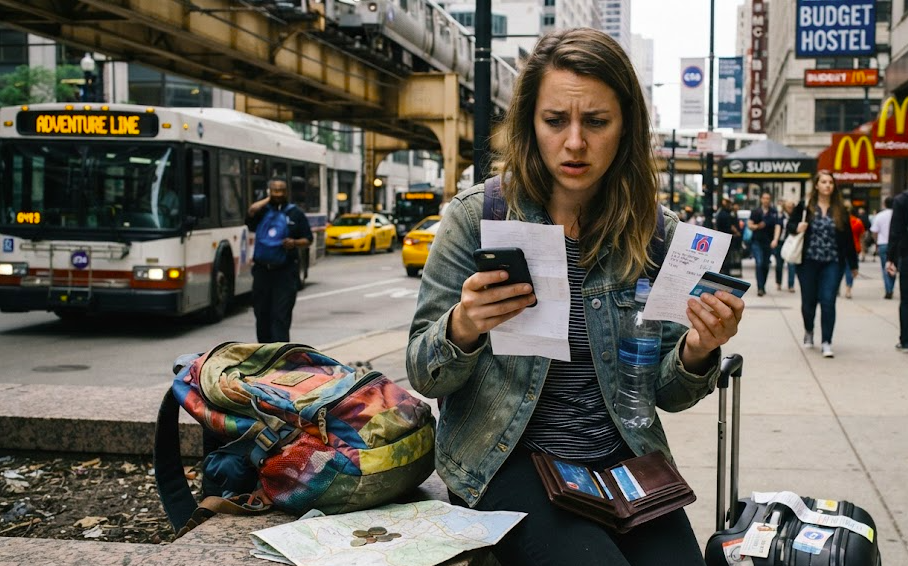
You can absolutely travel the USA on a budget, but the trick is different from backpacking through much of Europe or Asia. In California, Utah and Arizona, the money disappears less through one huge expense than through a steady drip of rental cars, gas, hotels, restaurant bills, taxes and tips. The cheapest strategy is usually to slow down, drive smart, cook or buy groceries, and use camping when the route allows it.
- The Reality: The USA has hostels and public transit, but many nature destinations in the Southwest are much easier to reach by car.
- The Ground Risk: A cheap rental rate can become expensive once insurance, fuel, parking, taxes, lodging and food are added.
- The Traveler's Hack: Build the trip around grocery-store meals, campsites and fewer long-distance moves instead of trying to see everything.
The Cheap USA Trip That Starts Getting Expensive
There is a particular moment when a budget traveler realizes the math has changed.
You open your laptop expecting the familiar backpacker menu: $20 hostel beds, cheap trains, local buses, rideshares and a hole-in-the-wall restaurant where dinner doesn't require a calculator.
Then you search California.
The hostel exists. Sometimes.
The bus exists. In some cities.
The cheap meal exists, too.
But suddenly you're looking at a rental car because the national park you actually want to visit is nowhere near the train station. Then comes gas. Then insurance. Then parking. Then the hotel because sleeping somewhere near the park costs more than the flight.
And that is the frustration behind one traveler's question about visiting California, Utah and Arizona on a tight budget.
The problem isn't that America has nothing affordable. It's that the affordable pieces don't always connect neatly.
That distinction matters.
Why California, Utah and Arizona Change the Budget Equation
The Southwest is enormous.
A traveler coming from Europe or Asia can be used to moving between cities by inexpensive rail, coach or public transportation. In the American West, the distance between the place where you sleep and the place you actually want to see can be the problem.
One Reddit commenter pointed out that even Americans can find domestic travel surprisingly expensive, with flights, hotels, food and car rentals quickly pushing a short trip toward four figures. Other travelers suggested that owning a car, camping, or traveling slowly changes the calculation considerably.
Those are personal experiences rather than universal prices, but they reveal the bigger issue: transportation isn't just one line in an American travel budget. It can determine the entire itinerary.
A five-hour drive may look reasonable on a map.
Do it three times and you've burned a serious chunk of both your vacation time and fuel budget.
The car isn't automatically the enemy
If your trip focuses heavily on national parks, desert landscapes and remote trailheads, a rental car can actually make the trip cheaper than trying to stitch together taxis, buses and expensive transfers.
The important question isn't:
"Can I avoid renting a car?"
It is:
"If I rent one, how do I make that car replace several other expenses?"
A small rental with unlimited mileage, where available, can become transportation, grocery-hauling space and even a backup sleeping option for travelers who are comfortable with car camping where it is legal and permitted.
Just don't assume every rental company allows one-way drop-offs or unlimited mileage. Those details need to be checked before booking.
The Biggest Budget Hack May Be a Grocery Store
Here's where the American road trip gets interesting.
You don't have to eat restaurant food three times a day.
Several travelers in the discussion recommended supermarkets, prepared deli meals, sandwiches, snacks and picnic lunches as some of the easiest ways to keep food costs under control.
And a cooler changes the game.
Buy ice. Stock drinks. Add sandwiches, fruit, yogurt, cheese and other foods that travel well. Keep shelf-stable snacks in the car. Then stop somewhere with a view and eat lunch outside.
You're still traveling.
You're just not paying restaurant prices every time your stomach growls.
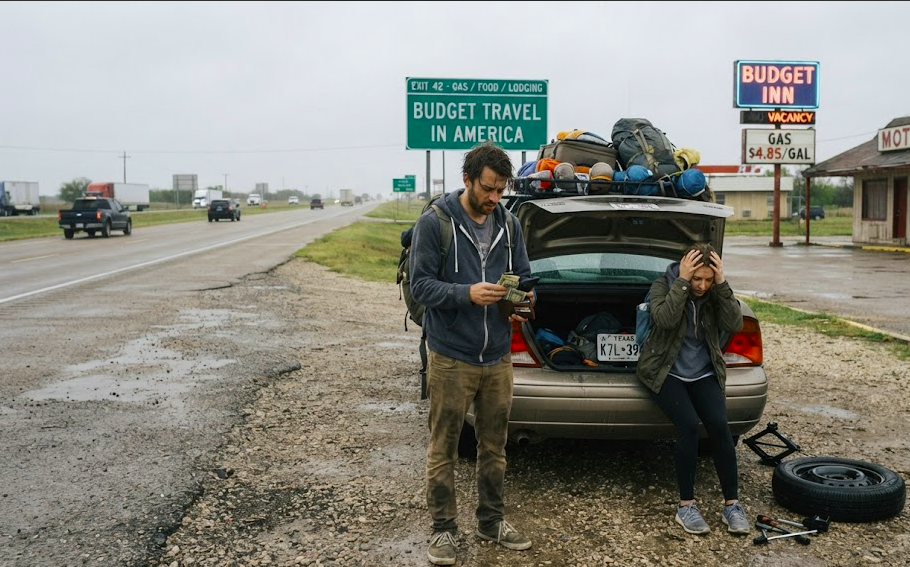
For travelers staying somewhere with a kitchen, cooking becomes even more useful. Some commenters specifically suggested accommodations with kitchen facilities and hotel properties that include breakfast.
The glamorous part?
None.
The practical part?
Your wallet notices.
Don't assume fast food is always cheap
One of the more revealing comments in the discussion was that even fast food can feel expensive compared with grocery shopping.
That is an important mindset shift.
If you're trying to keep costs low, compare the total meal cost, not simply the menu price.
A supermarket deli sandwich may eliminate a restaurant tip, save you time, and give you something to eat later. A picnic can replace an expensive sit-down lunch without turning the trip into a miserable survival exercise.
And if you do eat at a restaurant, check the menu online first.
That ten-minute price check can save you from sitting down hungry, ordering normally, and discovering the final bill is considerably higher after tax and tip.
The Numbers Travelers Forget to Put in the Spreadsheet
This is where many supposedly cheap USA itineraries fall apart.
The rental car looks cheap.
The hotel looks acceptable.
The restaurant looks affordable.
Individually, none of them seem outrageous.
Then the trip starts.
| Travel Expense | Initial Budget Assumption | What Can Push the Real Cost Higher |
|---|---|---|
| Rental Car | Low daily rental rate | Insurance, taxes, fuel, parking and one-way fees |
| Accommodation | Budget motel or hostel | High-demand dates, location and additional fees |
| Food | Affordable restaurant meal | Tax, tip, drinks and multiple meals per day |
| National Parks | Individual entry fees | Multiple parks can make a pass worth considering |
| Transportation | One main road trip | Extra mileage, detours and long transfers |
| Camping | Cheap overnight option | Gear, campsite fees, fuel and reservations |
One commenter suggested adding roughly 50% to restaurant menu prices as a personal safety buffer for tax and tip. That's not a universal rule, but it illustrates the right habit: budget from the final bill you expect to pay, not the attractive number printed beside the entrée.
Camping Can Flip the Entire Road Trip
If your priority is nature rather than downtown hotels, camping deserves serious consideration.
Travelers in the discussion repeatedly mentioned campsites, state parks, county parks and National Forest sites as alternatives to expensive lodging. Some reported finding campsites around the $20–$30 range, although actual prices and availability vary by location and date.
For a California-Utah-Arizona itinerary, this can be more than a lodging hack.
It can change the experience.
Instead of driving two hours back to an expensive tourist town after sunset, you can potentially stay much closer to the landscape you're there to see.
There's a catch.
November is not equally friendly to camping everywhere.
The original traveler planned to car camp in Arizona because temperatures can remain comparatively manageable there. That makes more sense than treating the entire Southwest as one giant warm-weather campground.
Check the specific location, elevation, overnight temperatures, campsite rules and weather before committing.
Cold desert nights are not interested in your budget.
Public Transportation Isn't Useless — It Just Has Limits
The advice to "just rent a car" isn't the whole story.
Several commenters pointed out that larger American cities do have public transportation, and some offer multi-day passes that can reduce local transportation costs. Los Angeles, for example, was specifically mentioned as having more useful public transit than some visitors expect.
California also has Amtrak routes that can make sense for certain parts of an itinerary.
The catch is the last mile.
A train can get you to a city.
It may not get you to the trailhead.
A bus can cross a large part of the country.
It may not leave you anywhere near the national park entrance you actually care about.
That means a smart itinerary can combine transportation modes rather than choosing one ideology and sticking to it.
Use public transit in cities.
Use trains where they make sense.
Rent a car for the remote section.
Don't pay for a rental car while it sits in a hotel parking lot.
National Parks: Don't Forget the Pass Math
California, Utah and Arizona contain a huge concentration of popular public lands and outdoor attractions.
One commenter recommended a national parks pass, while another noted an important distinction for international visitors: the annual America the Beautiful pass price can differ for non-U.S. residents.
The lesson isn't simply "buy the pass."
Do the math for your actual itinerary.
List the federal recreation sites you expect to visit, check the current entrance fees and compare the total with the applicable pass price for your residency status.
And don't automatically ignore state parks.
Several travelers pointed out that state parks can provide impressive scenery while carrying different, sometimes lower, entrance costs.
That's exactly the kind of comparison a frugal traveler should make before locking in an itinerary.
Four Ground Rules for a Cheap USA Road Trip
1. Stop trying to see everything
California alone is huge.
Add Utah and Arizona and suddenly your "budget trip" can become a long-distance driving marathon.
Every extra destination costs something: fuel, time, parking, food and potentially another night of accommodation.
Fewer bases can mean more actual exploring.
2. Make the car earn its keep
If you rent a vehicle, use it for the parts of the journey where it provides genuine value.
Carry a cooler.
Buy groceries.
Combine scenic drives with destinations.
Avoid paying for unnecessary hotel nights in expensive city centers when a cheaper, practical location fits the route.
3. Treat food like part of the itinerary
Don't wait until you're starving to decide where to eat.
Stock the car before leaving town.
Carry water and snacks.
Use grocery-store prepared foods when cooking isn't possible.
Save restaurant meals for places you genuinely want to experience.
That's a much better version of "traveling cheap" than eating badly every day.
4. Build November around the weather
The Southwest isn't one climate.
Elevation matters.
Desert temperatures can swing dramatically between daytime and nighttime, while mountain areas can be much colder.
If camping is part of the plan, check conditions for each specific area rather than relying on a state-wide forecast.
A $20 campsite isn't a bargain if you discover at midnight that your sleeping setup was designed for summer.
The Real Secret to Frugal Travel in America
The most useful lesson buried inside the Reddit discussion isn't a particular hostel, supermarket or rental-car company.
It's pace.
The travelers who described keeping U.S. trips relatively affordable tended to do some combination of camping, grocery shopping, slower travel, careful car rentals, public transit in cities and strategic accommodation choices.
None of that sounds glamorous.
But neither does opening your credit-card statement after a week of "budget" travel and realizing that every little expense quietly doubled the trip.
America can be expensive for travelers who move constantly and pay for convenience at every step.
It can also become much more manageable when you stop trying to travel through it like a compact European country.
Pick a region.
Stay longer.
Drive fewer unnecessary miles.
Sleep somewhere sensible.
Buy breakfast before leaving town.
Pack lunch.
Then spend your money on the things you actually crossed the ocean to see.
The desert sunrise doesn't care whether your lunch came from a restaurant or a supermarket cooler.
Have you found a genuinely good way to travel the USA on a tight budget? What saved you the most money — camping, groceries, public transit, points, or something completely different? Share your best American road-trip hack in the comments below.
🛡️ DAYLL Editorial Transparency
This post was researched and synthesized by the Dayll consumer editorial team. We test, verify, and cross-reference public policies and insider tips to bring you actionable advice without sponsor influence.