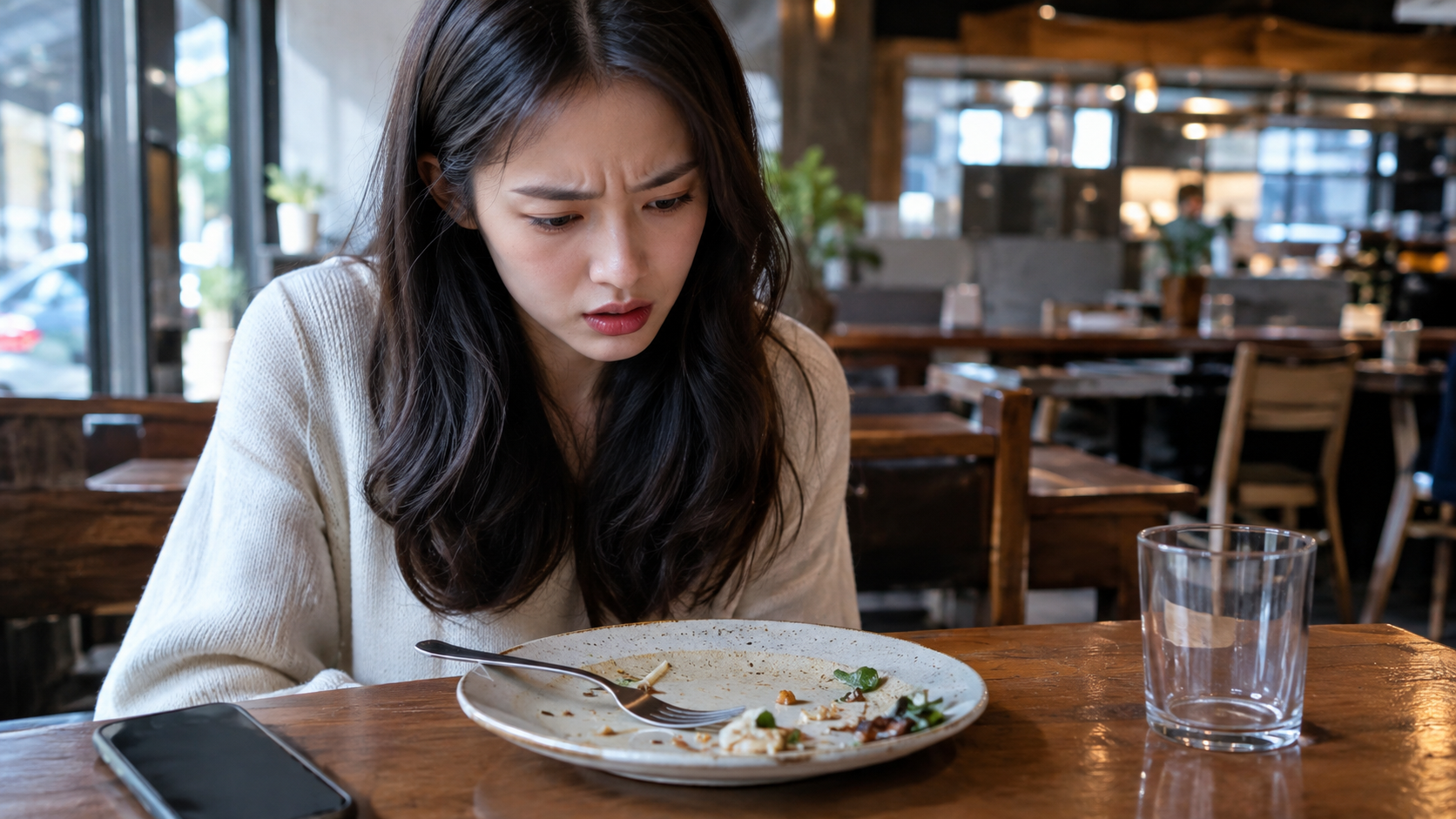
I was halfway through a meal on a solo trip when I stood up to use the bathroom. Nothing dramatic. No missed flight. No lost passport. Just a quick trip away from the table.
When I came back, my plate was gone.
For anyone traveling alone, the simplest restaurant habit may be the one nobody tells you about: let your server know you are coming back before leaving the table.
- The Reality: A solo diner who briefly leaves the table can easily be mistaken for someone who has finished eating or left the restaurant.
- The Ground Risk: Your food and drink may be cleared before you return, especially when staff cannot tell whether the table is still occupied.
- The Traveler's Hack: Tell the server, "I'm just stepping away for a minute and I'll be back," before leaving your table.
The Solo Dining Problem Nobody Warns You About
Eating alone has plenty of advantages. You pick the restaurant. You eat when you want. Nobody complains that the menu is too expensive or that you're taking too long.
But there is one tiny logistical problem that becomes obvious the moment you leave your chair.
When you travel with someone else, an unattended plate usually isn't unattended. Your travel companion is still sitting there, drinking water, checking their phone or staring at the menu.
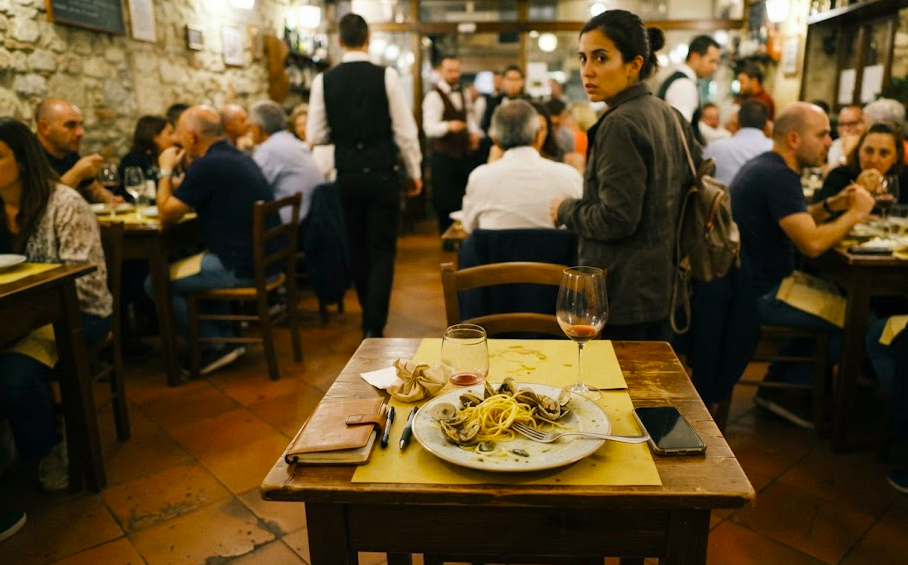
When you're alone, the entire table can suddenly look abandoned.
That is exactly what happened in the original travel story. The diner stepped away to use the bathroom and returned to find the plate already cleared.
The staff's mistake is understandable. From their point of view, an empty chair can look like a finished meal.
From the traveler's point of view?
You just lost lunch.
Why Restaurant Staff May Clear a Solo Traveler's Table
There is no universal restaurant signal that guarantees a server will know you are returning.
Some travelers mentioned traditional table signals in the discussion, including leaving a napkin on the chair or positioning utensils in a particular way. Others suggested covering a drink with a napkin or leaving an inexpensive personal item on the table.
But there is a problem with relying on any of those tricks: staff may not recognize them.
One commenter specifically pointed out that even traditional cutlery signals are not universal, and another said the simplest solution is still to communicate directly with the waitstaff.
That makes sense.
A five-second conversation is much more reliable than hoping someone understands your fork placement.
And it doesn't have to be awkward.
Just say:
"I'm going to the restroom, but I'll be right back."
That's it.
The Real Lesson: Don't Turn Your Belongings Into a Table Reservation
One of the stranger suggestions in the discussion was leaving something behind to make the table look occupied.
Travelers mentioned books, sunglasses, notebooks, scarves and other inexpensive items.
There is some logic behind the idea. An occupied-looking table is less likely to be mistaken for a completely abandoned one.
But there is a much bigger issue.
Your phone, wallet or passport should not become your table marker.
The original traveler specifically warned against leaving a phone or bag behind just to prove that someone was returning. That is a bad trade-off: protecting a half-eaten meal is not worth creating a theft risk.
If you need to step away, take your valuables with you.
And tell the server.
What Other Travelers Say Happens
The original story wasn't an isolated experience.
Several commenters described nearly identical situations.
One traveler said an almost-full salad disappeared while they stepped away for a coffee refill. Another returned from washing their hands to find the person who had seated them cleaning the table.
A hotel breakfast created the same problem for another solo traveler who went back for a second helping and returned to a cleared table.
The comments also included more complicated versions of the same problem: families returning from the bathroom to find their food and drinks gone, or travelers being mistaken for diners who had already left.
In one case, a hotel restaurant had even provided circular table markers showing whether a table was occupied or available. The traveler described the system as a simple way to signal that they were temporarily away.
The pattern is pretty clear.
The problem isn't necessarily bad service. Sometimes the table simply gives the wrong visual signal.
| Dining Situation | What the Traveler Expects | What Can Actually Happen |
|---|---|---|
| Solo diner steps away | Server knows the meal is still in progress | Empty seat may look like an abandoned table |
| Quick bathroom break | Food waits until the traveler returns | Plate or drink may be cleared |
| Return for more food | Table remains reserved | Buffet or hotel staff may reset the table |
| Leaving belongings behind | Item signals someone is coming back | Valuable belongings can create an unnecessary security risk |
| Telling the server first | Staff knows the diner is temporarily away | Much clearer communication about the occupied table |
Three Simple Rules for Eating Alone While Traveling
1. Tell the server before you leave
This is the most useful habit from the entire discussion.
Don't assume an empty chair explains itself.
A quick "I'll be right back" gives the staff the missing piece of information.
2. Take your valuables with you
Your phone, wallet, passport and bag are far more important than your unfinished plate.
If you want to leave something behind as a visual marker, travelers suggested inexpensive items such as a book or scarf. But even then, direct communication with the server is safer and clearer.
3. Don't rely entirely on restaurant etiquette signals
Napkin placement and cutlery positioning may communicate whether you're finished in some dining traditions.
But those signals aren't universal.
Even travelers familiar with them acknowledged that restaurant staff may not know or follow the same conventions.
Communication wins.
The Awkward Moment Is Actually the Useful Part
There is something funny about this kind of travel mistake.
Nobody lost a passport. Nobody missed a train. Nobody got stranded on a mountain.
A plate of food simply disappeared while its owner was in the bathroom.
Yet these are exactly the little problems that can make solo travel feel different.
When you're alone, you have to think about things that disappear completely when you're traveling with another person: who watches the luggage, who keeps the table occupied, who notices a gate change while you're buying coffee.
None of it is glamorous.
That's the point.
The best solo travel hacks aren't always clever apps or secret airport tricks. Sometimes they're tiny habits that prevent a completely avoidable headache.
So next time you're eating alone on the road and need to step away, don't leave your phone on the table.
Don't perform a complicated napkin ritual.
Just tell the server you're coming back.
Your dinner will probably still be there when you return.
Have you ever stepped away from a restaurant table while traveling and come back to find your food gone? Tell us what happened in the comments below!
🛡️ DAYLL Editorial Transparency
This post was researched and synthesized by the Dayll consumer editorial team. We test, verify, and cross-reference public policies and insider tips to bring you actionable advice without sponsor influence.