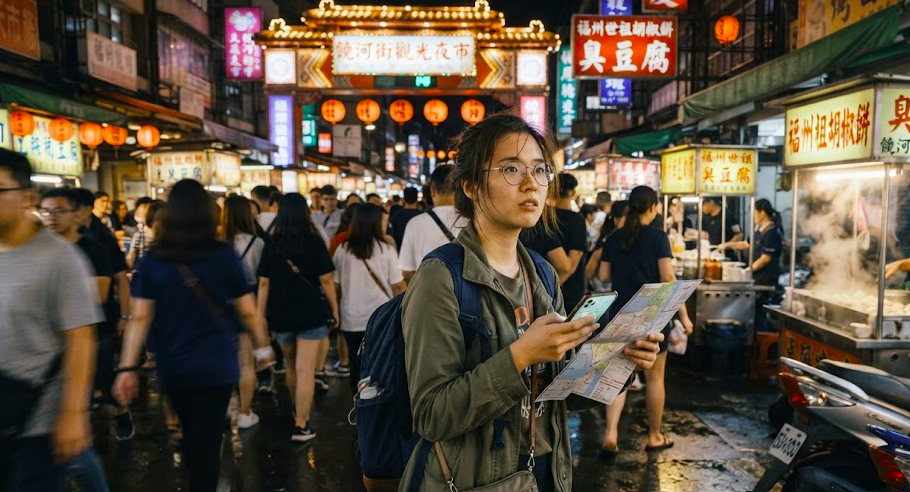
After 15 years of traveling around Asia, one Taiwanese woman says the biggest differences aren't always the landmarks—they're the little things that hit you once you're actually there. Scooter rules, language, transportation, prices, traffic, and the way strangers treat a woman traveling alone can completely change from one country to the next.
Her biggest lesson? A place being cleaner or more organized doesn't automatically make it feel better, while a messier destination can sometimes give you more room to improvise.
- The Reality: Solo travel conditions vary sharply across Asia, especially for scooters, public transportation, language, and everyday costs.
- The Ground Risk: Informal scooter rentals and inconsistent enforcement can become serious problems if an accident, police check, or insurance claim happens.
- The Traveler's Hack: Check licensing and insurance requirements before riding, and plan transportation around the specific city or island—not the country as a whole.
The Asia Travel Fantasy vs. What Happens on the Ground
Travel guides love putting countries into neat little boxes.
Thailand is the beach destination. Japan is efficient. Singapore is spotless. The Philippines is laid-back. Taiwan is easy.
Then you actually arrive.
The airport doors slide open. Humid air hits your face. Motorbikes are buzzing somewhere beyond the terminal. You have one bag in your hand, a phone at 42 percent, and suddenly the carefully researched version of the country doesn't seem quite as useful.
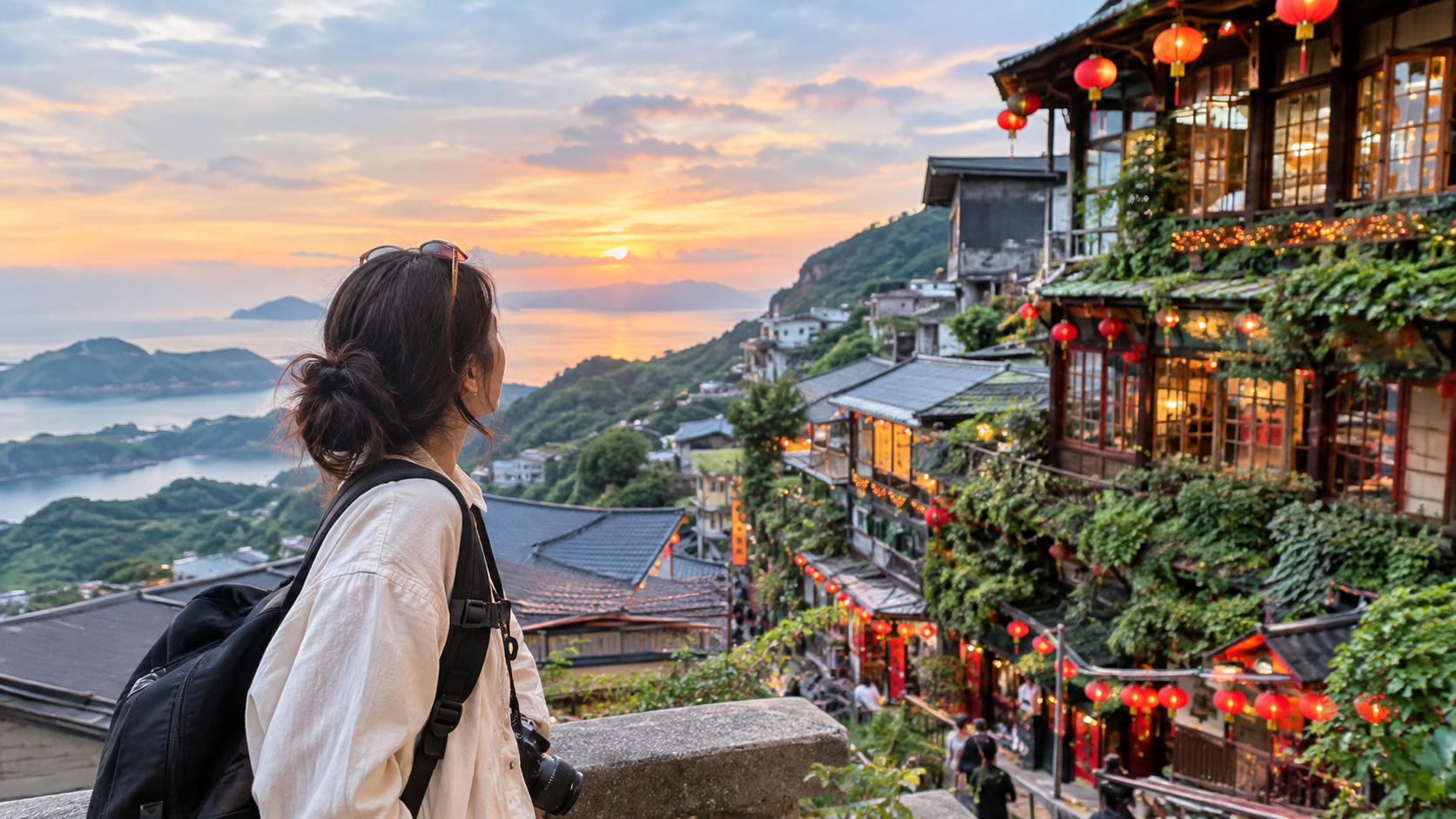
That is what makes this traveler's account interesting.
She is Taiwanese, travels solo frequently, and has spent roughly 15 years moving around Asia. She can ride a scooter, has returned to Thailand seven or eight times, lived and worked in the Philippines for more than a year, travels to Singapore for work, and has spent enough time in Japan and Taiwan to notice the small differences that don't show up in glossy itineraries.
She also doesn't claim to have a favorite.
That matters.
Her observation is that the less polished places can sometimes feel more human because there is more room to slip through the cracks and improvise. Cleaner, safer, more organized destinations can feel easier—but sometimes more controlled.
It's an interesting contradiction, and probably one a lot of long-term travelers eventually recognize.
Thailand: Easy Scooters, Brutal Traffic
Thailand is the country she has returned to most often, with roughly seven or eight trips and scooter rides on many of them.
She describes renting a scooter there as relatively easy and says she has even managed to rent one using a car license.
But there is a huge distinction between what a rental shop allows and what the law and your insurance actually cover.
That distinction is easy to ignore when you're standing at a rental counter with a helmet in your hand.
Her personal experience includes riding as far as the Myanmar border without major problems. That does not mean every traveler should assume the same arrangement is legal, safe, or insured.
The Reddit discussion that followed her post highlighted exactly this concern: commenters pointed out that scooter accidents can create insurance problems if the rider doesn't have the appropriate motorcycle license or documentation.
So the practical takeaway is simple.
Don't confuse "the rental company gave me the keys" with "I'm properly covered."
Outside Bangkok, she also found English more difficult. Interestingly, she sometimes encountered people who spoke Mandarin, which she associated with longstanding connections between Thailand and Taiwan through Taiwanese employment and migration patterns.
Then there is Bangkok traffic.
It isn't a minor inconvenience. It's the kind of traffic that can turn a short ride into a sweaty exercise in patience, with exhaust hanging over the road and scooters threading between cars.
If you're traveling solo, build extra time into your plans.
The Philippines: Friendly People, Complicated Tourist Friction
The Philippines was different because she didn't simply visit.
She lived and worked there for more than a year.
That gave her far more opportunities to travel alone and form impressions beyond the usual tourist route.
Language was one of the easiest parts. English worked well for communication, which removed one of the biggest sources of friction that she experienced elsewhere.
Transportation and prices could also be inexpensive, particularly outside the largest tourist centers.
But she noticed a different kind of friction in places such as Manila and Cebu.
Her account describes more police attention toward tourists in certain areas and claims that Asian-looking travelers could sometimes receive different treatment. She also describes situations where tourists were treated as people assumed to have money.
Those are her observations, not a universal description of the Philippines.
And the comments reveal why travelers should be careful about turning one person's experience into a countrywide rule.
The same goes for safety.
She personally felt the Philippines was less comfortable for solo women than Thailand, while still emphasizing the kindness of many Filipinos.
There is a contradiction here too.
A traveler can encounter aggressive pricing or an uncomfortable interaction in one moment and then have a complete stranger go out of their way to help them ten minutes later.
That's travel.
People aren't travel-guide categories.
Singapore: Efficient, Clean—and Your Wallet Knows It
Singapore is almost the opposite kind of travel experience.
The transportation system is convenient. The environment is clean. Solo travel feels straightforward. English is widely useful, and the traveler also found Mandarin helpful.
The problem?
Money.
She repeatedly emphasizes how expensive Singapore feels compared with the other destinations in her account, including taxis.
For a solo traveler, that can matter more than it does for a couple splitting a room or a family sharing transportation.
A taxi fare that feels manageable when divided between four people feels very different when it comes entirely out of one traveler's wallet.
The original post also advised women to avoid Little India at night.
That point became one of the biggest arguments in the comments.
Several Singapore-based or Singapore-familiar commenters strongly disputed the idea that Little India is generally unsafe at night. Some described the neighborhood as lively and comfortable after dark, while others argued that warnings about the area can reflect prejudice toward migrant workers rather than actual crime patterns.
That disagreement is worth preserving.
The useful lesson isn't "never visit Little India at night."
It's that a traveler's personal feeling of safety and a neighborhood's broader safety record aren't necessarily the same thing.
When advice involves a specific neighborhood or demographic group, check current local safety information rather than relying on a stranger's blanket warning.
Japan: Beautifully Organized, Surprisingly Expensive
Japan is the destination this traveler says she particularly likes.
But even here, the practical details matter.
As a Taiwanese traveler, she has one linguistic advantage: she can recognize many kanji characters.
That doesn't mean communication is effortless.
She found spoken English difficult to understand in some situations and suggested that travelers watch Japanese people speaking English before their trip. Her idea is to become familiar with the accent and rhythm of Japanese-accented English so conversations feel less jarring.
For transportation, Japan presents another trade-off.
Tokyo, Kyoto, and Osaka are relatively straightforward for travelers using public transit. Outside major cities, however, she found herself relying more heavily on buses and walking.
That changes the equation if your itinerary includes mountains, rural villages, or remote coastal areas.
She managed without driving, including trips to places such as Yarigatake, Kamikochi, and the Seto Inland Sea.
If you do decide to drive, however, don't treat Japan like a place where you can simply improvise with a rental scooter or car. The traveler specifically notes that an International Driving Permit is required for driving, while Japanese traffic rules are strict.
And then there are the desserts.
She calls out the sheer variety and notes that many aren't excessively sweet.
After a day of walking, a cold dessert from a convenience store or bakery can be a much more practical reward than another expensive sit-down meal.
Taiwan: Easy for Locals, Less Obvious for Foreign Visitors
It's easy to assume that a Taiwanese traveler would automatically find Taiwan effortless.
Some parts are.
Others aren't.
The traveler says foreign visitors can find car rental more complicated, while scooter riders need an actual motorcycle license.
Public transportation also becomes less convenient outside Taipei and Kaohsiung. The deeper you travel into rural areas, the more planning can matter.
Sightseeing buses and Taiwan Tour Bus-style services can help connect visitors to destinations that are harder to reach independently.
For everyday costs, she places Taiwan somewhere in the middle compared with the countries discussed.
Safety is one area where her experience is straightforward: she considers Taiwan very safe.
Language has also become easier for visitors in recent years, particularly when interacting with younger people.
One anecdote from the comments illustrates the point nicely.
An American traveler reportedly became confused while navigating a Taiwanese bus system alone. Instead of being stranded, the driver and other passengers helped him figure things out and eventually get home.
That is the kind of travel story that never appears in a "Top 10 Attractions" list.
And then there is YouBike.
For short distances, having a widely available bike-share system can completely change how a traveler experiences a city. You're no longer waiting for a bus for a five-minute journey or paying for a taxi.
You just unlock a bike and go.
Vietnam: Too Little Time for a Final Verdict
Vietnam is where the traveler deliberately pumps the brakes.
She says she spent only a short time there and openly admits that her impression may be biased.
That honesty is important.
Her main observation was about Ho Chi Minh City, where she noticed many short-term business travelers and a substantial Korean presence. She also described traffic and air quality as major challenges.
But she doesn't pretend a short stay is enough to explain an entire country.
That may be the most useful lesson in the entire post.
If you've only spent a few days somewhere, say so.
A rushed three-day impression of Vietnam, Indonesia, Korea, or any other country shouldn't carry the same weight as a person who has lived there for a year.
What 15 Years of Asian Travel Actually Changed
The numbers in this story tell their own story.
| Destination | Time or Visit History Mentioned | Main Travel Friction | Practical Advantage |
|---|---|---|---|
| Thailand | 7–8 visits | Traffic, air quality, language outside Bangkok | Scooter rental described as easy; Mandarin sometimes useful |
| Philippines | Over 1 year living and working | Tourist pricing and differing experiences by location | English communication and inexpensive taxis |
| Singapore | Frequent work trips | High overall costs | Convenient transportation and strong infrastructure |
| Japan | Multiple trips | Expensive transportation, rural transit | Clean, comfortable, extensive public transportation |
| Taiwan | Home country perspective | Rural transportation can require more planning | Safety, YouBike, improving English communication |
| Vietnam | Short stay | Traffic and air quality in Ho Chi Minh City | Limited personal evidence, so conclusions remain cautious |
There is no universal "best" country hiding in this table.
Instead, it shows something more useful: the same traveler can experience Asia very differently depending on what she needs from a trip.
If you want to ride a scooter through smaller roads, one country's rental culture may feel dramatically easier.
If you need English, another destination may remove hours of daily friction.
If you hate expensive taxis, Singapore's convenience comes with a very different price equation.
If you prefer walking and public transportation, Japan can work beautifully—until your itinerary moves into the mountains.
And if you want to travel around your own home region, Taiwan may look simple on paper while rural transportation still demands planning.
Four Ground Rules for Solo Travelers in Asia
1. Never Treat Rental Counter Rules as Legal Advice
A shop allowing you to rent a scooter does not automatically mean you're legally licensed or insured to ride it.
Check the destination's current motorcycle-license requirements and your travel insurance conditions before handing over your passport or cash.
2. Plan for the City, Not Just the Country
"Japan" isn't one transportation experience.
Neither is "Thailand" or "the Philippines."
Bangkok traffic, a rural Thai town, Cebu, Manila, and a remote Japanese mountain village can feel like completely different trips.
Build your transportation plan around the exact places you'll visit.
3. Separate Personal Experience From Universal Safety Advice
One traveler can feel uncomfortable somewhere while another feels perfectly fine.
The Little India discussion demonstrates this clearly. The original warning generated multiple comments from people who said they regularly visited the neighborhood at night without problems.
For solo travel, use firsthand experiences as clues—not as final safety maps.
4. Know When Your Sample Size Is Too Small
The traveler deliberately left out Korea and Indonesia because she had visited each only once.
That's not a weakness in the story.
It's good travel reporting.
One visit can tell you what happened to you on that trip. It doesn't necessarily tell you what a country is like.
The Part of Solo Travel Nobody Can Put in a Spreadsheet
After enough trips, countries stop looking like collections of attractions.
They become collections of tiny moments.
A taxi driver who refuses a ride.
A stranger pointing you toward the correct bus.
A rental shop handing over scooter keys with almost no paperwork.
A crowded Bangkok intersection where the exhaust sits in the air.
A Japanese bus timetable you stare at for five minutes before realizing you've been reading the wrong line.
A stranger helping a confused traveler get home.
Those moments are where a destination becomes real.
And perhaps that's why the traveler says she doesn't necessarily prefer the cleanest or safest-feeling places. Sometimes the imperfect ones force you to interact more. Sometimes the friction becomes the story you remember.
The trick is knowing which friction is merely inconvenient—and which one can leave you stranded, uninsured, overcharged, or in genuine danger.
That's the difference between romanticizing travel and actually being prepared for it.
Have you traveled solo across several Asian countries and noticed a difference that guidebooks completely missed? Tell us which small, everyday detail surprised you most in the comments below.
🛡️ DAYLL Editorial Transparency
This post was researched and synthesized by the Dayll consumer editorial team. We test, verify, and cross-reference public policies and insider tips to bring you actionable advice without sponsor influence.